
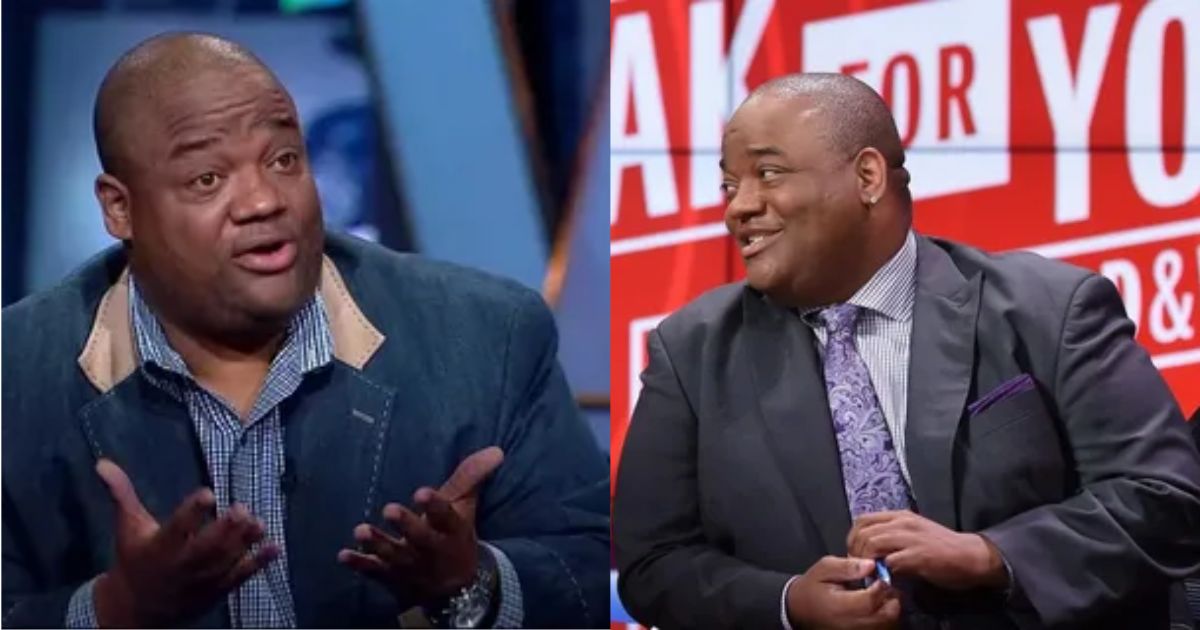
| Quick Facts | Details |
|---|---|
| Full Name | Jason Whitlock |
| Profession | Sports Journalist, Media Personality, Podcast Host |
| Estimated Net Worth (2026) | $3–5 Million |
| Current Platform | Blaze Media |
| Previous Networks | Fox Sports, ESPN, Kansas City Star |
| Education | Ball State University |
| Known For | Fearless commentary, sports culture criticism |
| Nationality | American |
What Is Jason Whitlock Net Worth in 2026?
Cut straight to it — Jason Whitlock’s net worth in 2026 sits somewhere between $3 million and $5 million, based on career earnings analysis, platform salaries, and his multiple revenue streams across media. That’s not a number pulled from thin air. It reflects decades of high-profile journalism, lucrative television contracts, digital media deals, and the kind of sustained platform presence that keeps money flowing long after any single job ends.
What makes Jason Whitlock’s income particularly interesting is its diversity. He’s never been a one-platform earner. From newspaper columns to ESPN studios to Fox Sports prime time to his current home at Blaze Media, Whitlock has continuously monetized his opinions — and his audience has consistently followed. That loyalty is worth real money in the modern media economy, and Jason Whitlock’s career earnings reflect exactly that sustained value.
Some estimates push his net worth higher — toward $6 or $7 million — while more conservative analyses land closer to $2.5 million. The honest answer sits in the middle, acknowledging that media salaries at his level, combined with podcast revenue and brand work, comfortably produce the $3–5 million range over a career spanning three-plus decades.
| Net Worth Estimates | Range |
|---|---|
| Conservative Estimate | $2.5 Million |
| Most Cited Estimate | $3–5 Million |
| High-End Speculation | $6–7 Million |
| Primary Wealth Source | Television & Digital Media |
| Secondary Sources | Podcasting, Writing, Brand Work |
Who is Jason Whitlock?
Jason Whitlock is one of the most polarizing and consequential voices in American sports journalism — a writer and broadcaster who built his reputation by saying things that other media professionals were too cautious to say. Born on September 18, 1967, in Indianapolis, Indiana, Whitlock grew up in a working-class environment that shaped the directness and social awareness that would later define his professional voice.
He attended Ball State University in Muncie, Indiana, where he played college football as an offensive lineman — a fact that matters more than people realize. It gave him athlete credibility that most sports commentators simply don’t have. He wasn’t just watching sports from the press box. He played the game at a competitive level, understood locker room culture from the inside, and carried that perspective into every column and segment he ever produced.
After Ball State, Whitlock launched into print journalism at a time when newspaper sports sections still carried enormous cultural weight. His talent for provocative, structurally sound argumentation got him noticed quickly. From regional papers to national platforms, his climb was consistent if not always smooth. Controversy followed him — but so did readers, viewers, and eventually, serious money.
Early Career and Rise in Sports Journalism
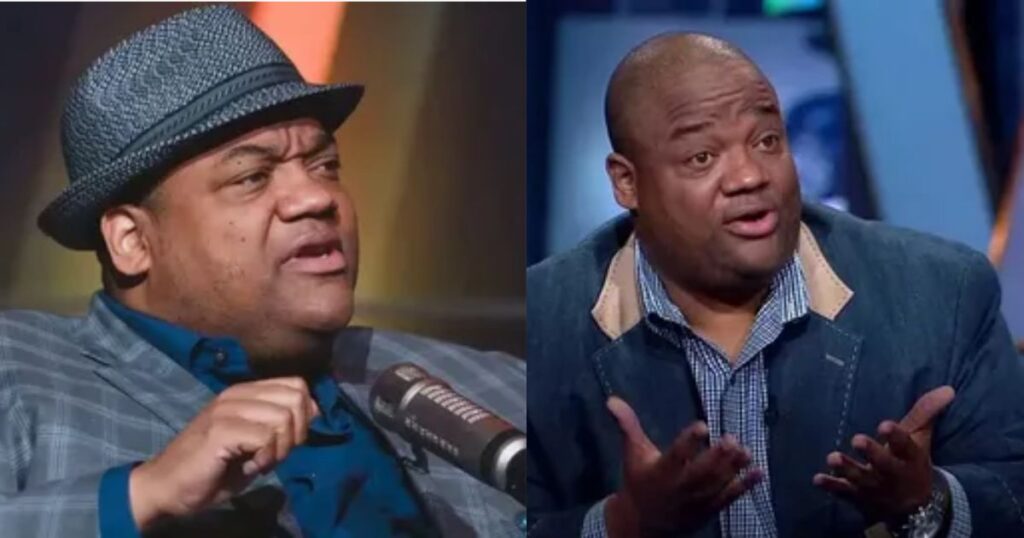
Jason Whitlock’s journalism career began in the early 1990s when he joined the Kansas City Star as a sports columnist. This was formative territory. The Star gave him a major regional platform and the editorial freedom to develop the combative, culturally engaged commentary style that would eventually make him nationally famous. His columns tackled race in sports, athlete responsibility, media hypocrisy, and institutional failures within professional leagues — topics that were genuinely difficult to write about honestly in that era.
His work at the Star earned him recognition from the Associated Press Sports Editors, and his reputation grew beyond Kansas City’s regional sphere. By the time he left, he had established himself as someone worth watching at the national level — a columnist with both intellectual range and the courage to publish uncomfortable conclusions.
ESPN came calling, and Jason Whitlock moved into television commentary — a natural extension for someone with his verbal gifts and physical presence. His appearances on ESPN’s various debate and commentary formats introduced him to a national television audience and demonstrated that his skills translated seamlessly from the written page to the camera. The transition from print journalist to television personality isn’t automatic. Whitlock made it look easy because his core skill — clear, confident argumentation — works in any format.
Read More: Alexander Shunnarah Net Worth 2026: Career & Earnings Overview
Jason Whitlock Income Breakdown
Earnings From Fox Sports and Television Appearances
Fox Sports represented a major financial leap in Jason Whitlock’s salary history. When he joined the network, Fox Sports was investing heavily in opinion-driven programming designed to compete with ESPN’s dominant debate format content. Whitlock fit that model perfectly — he was experienced, controversial in a ratings-friendly way, and willing to take positions that generated conversation.
Reports from media industry sources during his Fox Sports tenure suggested his annual compensation was in the range of $500,000 to $1 million per year, though exact contract figures were never publicly confirmed. What’s known is that Fox Sports paid premium rates for established media talent during this period, and Whitlock’s profile at the time of signing warranted competitive offers.
His television work extended beyond Fox Sports to guest appearances across multiple networks — panels, debate shows, special programming — each carrying its own appearance fee. These supplemental television earnings, compounding across years, add meaningfully to his overall career earnings calculation.
Income From ESPN, Columns, and Editorial Work
ESPN paid Jason Whitlock during periods of his career when the network was the undisputed center of sports media gravity. His ESPN salary during his time there — which included both on-air commentary and written editorial work through ESPN.com — reflected the network’s willingness to pay for recognizable names with established audiences.
Print journalism, even at its peak, doesn’t generate the salary numbers that television does. But Jason Whitlock’s column work — whether at the Kansas City Star, ESPN.com, or other outlets — built the brand equity that made every subsequent television contract more valuable. Think of the columns as marketing for the person, not just journalism for the audience. Every major column that went national added to his market value in ways that don’t appear directly on a paycheck but absolutely affect the next negotiation.
Jason Whitlock Podcast and Digital Media Revenue
Jason Whitlock’s podcast has become a central revenue engine in his current financial picture. His show — operating under the Blaze Media umbrella — generates income through multiple overlapping streams: advertising revenue, subscription models, platform licensing, and the broader audience monetization strategies that digital media companies now employ at sophisticated levels.
Podcast advertising rates for shows with dedicated, politically and culturally engaged audiences run anywhere from $20 to $50 CPM (cost per thousand listeners) for mid-roll ad placements. A show with 100,000+ regular listeners generates meaningful advertising revenue at those rates. Whitlock’s audience, while niche by mainstream standards, is deeply engaged — the kind of listener base that converts at high rates and attracts advertisers willing to pay premium prices for access.
Digital media revenue is harder to quantify than television salaries, but in aggregate, a consistent podcast operation at Whitlock’s level realistically generates $200,000 to $500,000 annually when advertising, platform deals, and audience monetization are combined.
The Role of Blaze Media in Jason Whitlock’s Current Earnings
Blaze Media — the conservative media company that merged TheBlaze and CRTV into a single platform — is Jason Whitlock’s current professional home and his primary income source in 2026. His show Fearless with Jason Whitlock operates as a flagship property within the Blaze ecosystem, meaning he isn’t just a talent for hire — he’s a brand asset the company has invested in maintaining.
Blaze Media talent contracts for established personalities of Whitlock’s profile typically run in the $300,000 to $700,000 annual range, based on comparable deals reported across the conservative media landscape. These contracts often include base salary plus performance bonuses tied to audience metrics, subscriber growth, and platform engagement — structures that reward exactly the kind of passionate, loyal audience Whitlock has cultivated.
The Blaze Media deal also gives Whitlock production support, distribution infrastructure, and marketing resources that would cost significantly more if he tried to replicate them independently. That operational support has real financial value that doesn’t show up as direct income but absolutely affects his bottom line.
Book Deals, Writing Projects, and Publishing Income
Jason Whitlock’s publishing footprint contributes to his overall financial picture in ways that fluctuate based on project activity. Book advances for established media personalities with national platforms typically range from $50,000 to $250,000 depending on publisher interest, projected audience size, and the commercial viability of the subject matter. Whitlock’s commentary on race, sports culture, and media — topics with proven commercial appeal in both mainstream and conservative publishing markets — positions him well for meaningful book deals.
Ongoing royalties from published works, even years after release, provide passive income that compounds quietly in the background of a media career. For someone with Whitlock’s decades-long brand presence, accumulated publishing income across multiple projects adds a layer of financial stability that purely salary-dependent earners lack.
Brand Partnerships, Sponsorships, and Collaborations
Brand partnerships for media personalities of Jason Whitlock’s profile tend to align with audience demographics. His audience — politically conservative, sports-engaged, culturally opinionated — attracts specific categories of brand interest: firearms and outdoor lifestyle brands, financial services targeting self-reliant demographics, health and fitness products, and media companies seeking credibility with his viewer base.
Individual brand partnership deals in the digital media space for someone with Whitlock’s reach can range from $10,000 to $100,000 per engagement, depending on the scope of the partnership, exclusivity requirements, and content integration depth. These deals, while individually variable, collectively add meaningful supplemental income across a calendar year.
Social Media Influence and Monetization Strategy
Jason Whitlock’s social media presence — particularly on Twitter/X, where his commentary style translates perfectly to the platform’s debate-driven culture — extends his reach beyond his primary broadcast audience and creates additional monetization opportunities. His Twitter/X following has grown substantially as the platform shifted toward favoring provocative political and cultural commentary, which is precisely his wheelhouse.
X’s monetization programs — including the creator revenue sharing model introduced under Elon Musk’s ownership — generate income directly tied to engagement metrics. For accounts with Whitlock’s following and engagement rates, monthly platform payments can range from $1,000 to $10,000, depending on activity levels and viral content performance. It’s not his largest income source but it’s genuinely passive once the content is published.
Jason Whitlock Business Ventures and Side Income Streams
Beyond his media work, Jason Whitlock has explored business ventures aligned with his brand identity — including speaking engagements at conservative media conferences, political events, and sports industry gatherings. Professional speaking fees for personalities of his stature typically start at $10,000 per engagement and can exceed $25,000 for major events.
His involvement in the broader conservative media ecosystem also creates consulting and advisory opportunities — roles that carry both financial compensation and strategic value for companies seeking to understand the culturally engaged conservative audience that Whitlock has spent decades building relationships with.
Net Worth Growth Over the Years
| Career Phase | Estimated Annual Earnings | Net Worth Contribution |
|---|---|---|
| Kansas City Star Era (1990s) | $40,000–$80,000 | Foundation Building |
| ESPN Period (2000s) | $200,000–$400,000 | Significant Growth |
| Fox Sports Era (2010s) | $500,000–$1M | Peak Salary Period |
| Blaze Media + Podcast (2020s) | $400,000–$700,000 | Diversified Revenue |
| 2026 Estimated Total Net Worth | — | $3–5 Million |
Comparison With Other Sports Media Personalities
Put Jason Whitlock’s net worth next to his peer group and the picture becomes clearer. Stephen A. Smith — perhaps the most commercially successful sports commentator in current American media — reportedly earns over $12 million annually from ESPN, placing his net worth in the $20–30 million range. Skip Bayless, another Fox Sports debate format star, has been reported at similar high-end compensation levels. Colin Cowherd’s deal with Fox Sports has been estimated at multi-million dollar annual figures.
Whitlock doesn’t compete with those numbers — and arguably never aimed to occupy that exact space. His path through conservative media rather than mainstream sports entertainment meant trading maximum commercial scale for editorial independence and ideological alignment. That’s a real trade-off with real financial consequences.
What he does compare favorably on is longevity and audience loyalty. His core following has stayed with him across platform transitions that would have scattered less committed audiences. That retention has real dollar value even if it doesn’t produce Smith-level paychecks.
| Media Personality | Estimated Net Worth | Primary Platform |
|---|---|---|
| Stephen A. Smith | $20–30 Million | ESPN |
| Skip Bayless | $10–15 Million | Fox Sports |
| Colin Cowherd | $10–12 Million | Fox Sports |
| Jason Whitlock | $3–5 Million | Blaze Media |
| Shannon Sharpe | $16–20 Million | Various / Podcast |
| Dan Patrick | $25 Million | Various |
Conclusion
Jason Whitlock’s net worth of $3–5 million in 2026 is the product of thirty-plus years of deliberate, combative, consequence-accepting journalism and commentary. He built his wealth the hard way — through print, then television, then digital media — never settling comfortably into one revenue lane when multiple streams were available. His career earnings reflect both the commercial ceiling of mainstream sports media and the genuine financial viability of the alternative conservative media ecosystem he now inhabits.
Is he as wealthy as the biggest names in sports broadcasting? No. But he’s financially independent, professionally uncompromising, and still generating serious income from an audience that follows him because of what he says, not just where he says it. In a media landscape that rewards conformity, that’s worth something. And apparently, it’s worth a few million dollars too.
FAQs
How much does Jason Whitlock make at Fox?
Jason Whitlock’s time at Fox Sports is largely behind him — his current home is Blaze Media. During his Fox Sports tenure, industry estimates placed his annual compensation in the $500,000 to $1 million range, though the network never officially confirmed contract specifics. Fox Sports invested heavily in opinion talent during that era, and Whitlock’s established national profile warranted competitive compensation. His current Blaze Media deal is estimated in the $300,000 to $700,000 annual range, based on comparable conservative media contracts.
What is Jason Whitlock doing now?
Jason Whitlock currently hosts Fearless with Jason Whitlock on Blaze Media, where he produces regular podcast and video content covering sports, culture, politics, and media criticism. He remains one of the more active voices in conservative sports commentary, using his platform to critique mainstream sports journalism, address race and culture in athletics, and push back against what he sees as ideological conformity in sports media. He’s also active on social media — particularly Twitter/X — where his commentary continues to generate significant engagement and occasional national controversy.
Did Jason Whitlock play football?
Yes — and this is genuinely important context for understanding his credibility as a sports journalist. Jason Whitlock played college football as an offensive lineman at Ball State University, giving him direct competitive experience that most sports commentators simply don’t have. He understands blocking assignments, physical preparation, locker room dynamics, and the psychological demands of competitive athletics from the inside. That background fundamentally shapes how he analyzes athletes and sports culture — with the earned authority of someone who actually played the game, not just watched it.
