Quick Bio
| Detail | Information |
|---|---|
| Brand Name | Happy Dad Hard Seltzer |
| Founded | June 2021 |
| Co-Founders | Kyle Forgeard (NELK Boys), John Shahidi, Sam Shahidi |
| CEO | Sam Shahidi |
| Headquarters | Orange County, California |
| Product Type | Hard Seltzer, Hard Tea, Hard Lemonade |
| ABV | 5% (standard); 10% (Extra Hard Lemonade) |
| Calories Per Can | 100 |
| Sugar Per Can | 1g |
| Core Flavors | Wild Cherry, Lemon Lime, Watermelon, Pineapple |
| Estimated Net Worth (2026) | $250M – $300M |
| Annual Revenue (2026) | $54.4M – $100M+ |
| US Market Rank | #3 (West Region Convenience), #4 National Convenience |
| Employees | 136–226+ |
Who Owns Happy Dad?
Happy Dad Hard Seltzer was co-founded by NELK Boys creator Kyle Forgeard, John Shahidi, and Sam Shahidi. That’s a combination that looks unusual on paper — a YouTube prankster and two tech-savvy entrepreneurs — but it turned out to be exactly the right formula for disrupting an industry dominated by corporate giants. Each founder brought something the others couldn’t replace. Kyle supplied the audience: millions of loyal fans who trusted his taste and followed his lead without hesitation. John and Sam supplied the business infrastructure: deep experience in consumer brand-building, distribution networks, and the behind-the-scenes machinery that turns a great product idea into a scalable company.
Sam Shahidi serves as CEO, handling the operational and strategic vision that’s driven Happy Dad’s explosive growth since launch. Happy Dad has quickly evolved from a “creator project” into a legitimate beverage powerhouse that rivals legacy brands like White Claw and Truly. Kyle Forgeard remains a co-owner and the brand’s cultural ambassador — the face that every NELK Boys fan instantly associates with the product. John Shahidi rounds out the ownership structure with business development expertise. Exact ownership percentages remain undisclosed, but founders typically retain 60–80% equity in similar venture-backed consumer brands after initial funding rounds. Beyond the core founders, SteveWillDoIt — another prominent NELK Boys personality — is closely associated with the brand and benefits financially through promotions and collaborations.
How Happy Dad Became So Popular
The Happy Dad origin story is a textbook case in what happens when a massive, engaged audience meets a product those people actually want. The launch was announced on Memorial Day 2021 through the NELK Boys’ platforms. The venture represented a pivot for the NELK Boys from producing prank videos and operating the Shots Podcast Network to beverage entrepreneurship, leveraging their online influence among young audiences. The initial product was conceptualized with simple, refreshing flavors in standard 12-ounce cans, deliberately avoiding the slim “skinny cans” common in the category to appeal to a demographic of young men seeking straightforward options.
That last detail — the regular can versus the skinny can — was a branding decision as much as a product decision. The NELK Boys’ audience is predominantly young men who have a complicated relationship with the hard seltzer category. Seltzers were perceived as a feminine product. Happy Dad’s founders looked at that perception, shrugged, and made a regular-sized can instead. The message was implicit but unmistakable: this is for everybody. The announcement drew such enormous support and enthusiasm on Instagram that it temporarily shut down the Happy Dad page. In a little over a week, the account boasted over 600,000 Instagram followers, amassing more than 5 million views on its announcement video. Most beverage brands spend years and millions trying to get that kind of response. Happy Dad got it before a single can hit shelves.
Happy Dad’s Rise to Success
From Memorial Day 2021 to March 2026, the Happy Dad trajectory has been steep, consistent, and increasingly hard to ignore even for legacy industry players. The brand didn’t just grow — it grew while the broader hard seltzer category was declining. While the broader beer industry saw a 4.4% decline in volume in late 2025, Happy Dad reported a staggering 21% volume growth in the same period. That’s not bucking a trend. That’s actively swimming upstream and gaining speed.
Happy Dad moved into the #3 position in the hard seltzer category across the West Region in convenience stores, according to the latest Circana data covering the 12-week period ending March 7, 2026. The brand posted 47% dollar sales growth year over year, reaching $3.4 million in the region. Unit sales surged nearly 96%, with total units climbing to 447,600 from 228,600 a year ago. For context, while White Claw grew 4.5% and Truly declined 8.6% in dollar sales over the same period, Happy Dad’s growth rate outpaced every brand in the top five.
The brand has sold over 224 million cans since its 2021 launch. That number, spread across a product that launched without traditional advertising, is genuinely extraordinary. It represents real purchase decisions by real people who chose Happy Dad over White Claw, Truly, Topo Chico, and dozens of other options at the shelf.
Read More: Kelly Rizzo Net Worth 2026: How Much Does She Really Earn? Full Breakdown
Initial Struggles and Successes
No brand launch is purely smooth, and Happy Dad’s early days came with real challenges. Breaking into alcohol distribution is notoriously difficult — state-by-state regulations, distributor relationships built over decades, and entrenched shelf space controlled by established giants create formidable barriers for any new entrant, no matter how famous their founders are. The NELK Boys’ audience didn’t come with built-in distribution infrastructure.
Following its initial launch, Happy Dad Hard Seltzer transitioned from wine and spirits distributors to beer networks to enhance market penetration and access broader retail channels, a strategic shift announced in early 2025. This move facilitated deeper support from established beer distribution infrastructure. That pivot was significant. Beer distributors operate on different terms than wine and spirits houses — they move faster, cover more ground, and have deeper relationships with convenience stores, grocery chains, and gas station networks that are critical to beverage brands.
CEO Sam Shahidi announced the pivot to beer distributors, describing the plan to expand from just under a dozen major distributors to as many as 260 across the U.S. by March 2025. Simultaneously, Blue Equity made a significant investment in Happy Dad in 2023, providing the capital and infrastructure needed to move from 16 states to a truly nationwide presence. These two moves — smarter distribution and strategic investment — were the pivots that turned regional success into national dominance.
Happy Dad Net Worth (2026)
The Happy Dad net worth question is one that doesn’t have a single clean answer, partly because Happy Dad is a private company and doesn’t publish financial statements. But the available evidence paints a picture that’s genuinely impressive. As of 2026, Happy Dad’s net worth remains between $250 million and $300 million, with potential for further growth. The brand’s expansion and increasing demand suggest that its value will continue to rise in the coming years.
Revenue estimates vary but all point in the same direction. The Happy Dad Hard Seltzer annual revenue was $54.4 million in 2026, according to one data source. Other analysts take a broader view: Happy Dad Hard Seltzer’s expected yearly revenue is $67.1 million, with revenue per employee estimated at $297,000. More bullish estimates push even higher. Happy Dad earns an estimated $80–100 million per year, depending on sales cycles, distribution, and product launches.
| Financial Metric | Estimate |
|---|---|
| Brand Net Worth (2026) | $250M – $300M |
| Annual Revenue | $54.4M – $100M+ |
| Cans Sold Since Launch | 224M+ |
| Employee Count | 136–226+ |
| Revenue Per Employee | ~$297K |
| National Convenience Rank | #3–4 in Hard Seltzer |
| Year-on-Year Volume Growth (2025) | 21% |
| Blue Equity Investment Year | 2023 |
The Happy Dad brand value goes beyond pure revenue, though. The Happy Dad net worth story demonstrates modern brand-building power. NELK Boys transformed YouTube fame into a beverage empire in under five years. Their $250–$300 million valuation validates influencer-led brands as legitimate business models, not fleeting trends.
Inside the Business Model
Happy Dad’s business model is built on a foundation that most traditional beverage companies spent decades trying to buy: genuine cultural relevance with a young audience that doesn’t trust corporate marketing. The model has three interlocking pillars — product quality, community ownership, and distribution reach — and all three have to work together for the whole thing to hold.
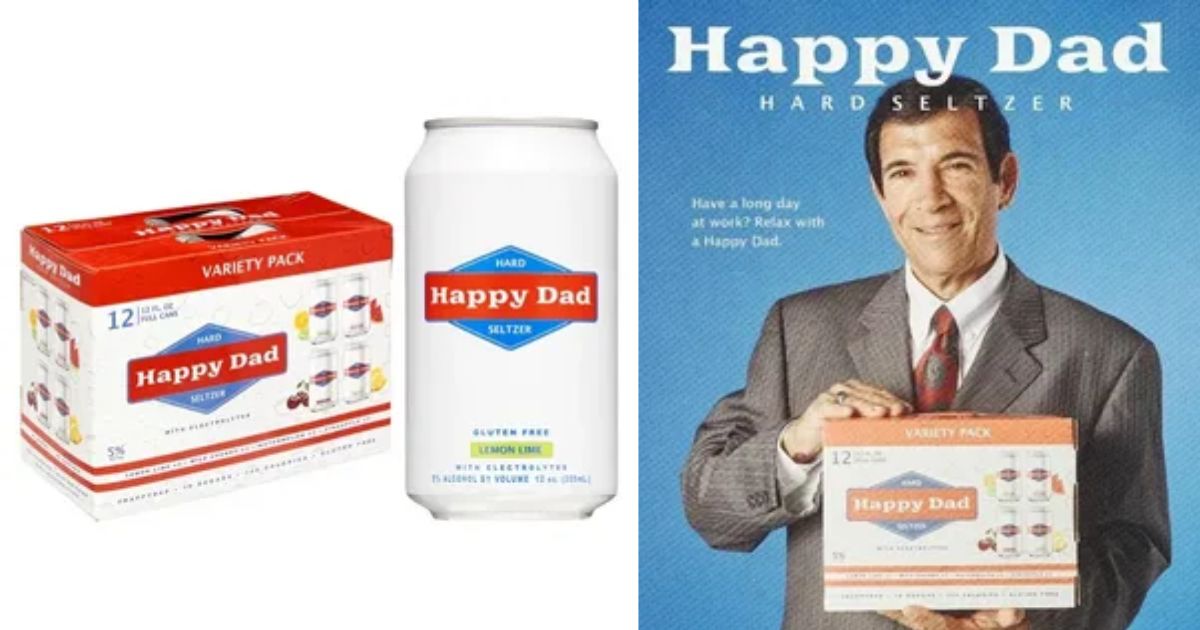
On product quality, Happy Dad made deliberate choices that signal premiumization without pretension. The brand offers a uniquely refreshing option with low carbonation. Each can is crafted with all-natural flavors, containing just one gram of sugar and 100 calories. As a gluten-free choice infused with electrolytes, Happy Dad provides a crisp, clean finish perfect for any social gathering. These aren’t incidental product features — they’re carefully chosen specs that address the most common criticisms of hard seltzers: too sweet, too carbonated, too artificial.
On community ownership, the NELK Boys didn’t sell Happy Dad to their audience. They invited their audience into the brand as stakeholders in its success. Fans don’t just drink Happy Dad; they evangelize it. They tag it in posts, wear it in videos, and argue about it in comment sections with an energy that no paid advertising campaign can replicate. Sam Shahidi positioned the brand as: “We’re like Smart Water. We’re a premium seltzer. We’re at the price of a White Claw, Truly. We have electrolytes, 30% low carbonation… and then we’ve got the energy and coolness of what Red Bull was 30 years ago.” That self-positioning is sharp. Premium quality at accessible prices with countercultural energy — that’s a formula that builds loyal customers.
On distribution, the move to beer networks has opened doors that wine and spirits distributors simply couldn’t. Reaching 260 distributors nationwide gives Happy Dad shelf presence in stores where its core demographic actually shops: convenience stores, gas stations, sports venues, and big-box retailers. Happy Dad ranked #1 in dollar growth among key competitors and #1 in unit growth year over year during Dry January 2026 at Walmart — which says a lot about what improved distribution access can do for a brand that already has demand.
Happy Dad’s Marketing and Brand Lifestyle
Happy Dad marketing is one of the most studied examples of influencer-led brand-building in the modern beverage industry, and the reason is simple: it worked in ways that traditional marketing textbooks don’t fully account for. The brand didn’t hire celebrities to appear in commercials. It emerged organically from a content universe that millions of young people already inhabited and trusted.
The Happy Dad lifestyle brand association is powerful. The NELK Boys built their following around a certain attitude — fun, irreverent, anti-corporate, and brazenly themselves. Happy Dad absorbed that identity completely. Cracking open a Happy Dad in a YouTube video isn’t a product placement; it’s a natural extension of the world those creators have built. That authenticity is something that money genuinely cannot manufacture, and it explains why Happy Dad achieved in three years what most brands spend decades trying to build.
Perhaps the biggest milestone in the brand’s history occurred in late 2025: Happy Dad became the first-ever hard seltzer partner of The Joe Rogan Experience (JRE). That partnership is about as close to a perfect cultural fit as a brand can achieve. Joe Rogan’s audience — overwhelmingly male, 25–45, skeptical of corporate messaging, fiercely loyal to creators they trust — is precisely the demographic Happy Dad was built for. The JRE partnership didn’t just drive sales. It cemented Happy Dad’s position as the hard seltzer for people who don’t usually drink hard seltzers.
Social Media and Viral Success
Social Media Strategy
Happy Dad’s social media strategy is both simple and rare: be genuinely entertaining rather than promotional. The NELK Boys’ YouTube channel, with tens of millions of views per video, functions as the brand’s primary marketing vehicle. Every time Kyle or Steve cracks a Happy Dad on camera — in a video that millions of people chose to watch — that’s a product impression that carries more credibility than a $500,000 Super Bowl spot.
Happy Dad Hard Seltzer didn’t need Super Bowl ads or celebrity spokespeople. The Full Send brand community did the heavy lifting. Their approach challenged every conventional wisdom about launching alcoholic beverages. The Instagram page, which gained over 600,000 followers within a week of the brand’s announcement, continues to post content that looks more like the NELK Boys’ native content than conventional brand advertising. Humor, chaos, real moments, and genuine enthusiasm — that’s the Happy Dad social media formula.
Viral Campaigns
Specific viral moments have amplified the brand’s reach far beyond the NELK Boys’ own audience. Limited edition collaborations, surprise giveaways, and stunts executed with the same energy that made the NELK Boys famous have repeatedly generated earned media coverage that traditional PR budgets would struggle to match. The collaboration with Death Row Records — producing a Snoop Dogg-endorsed grape flavor — reached audiences that no amount of conventional beer marketing would touch. The Happy Dad x Realtree Extra Hard Lemonade launch, targeting outdoor enthusiasts, extended the brand into demographic territory it hadn’t previously owned.
The hard tea offerings feature a variety pack with flavors such as Original, Peach, Lemon, and Blueberry, each at 5% ABV. The lemonade line introduces higher-ABV options, notably the Extra Hard Lemonade at 10% ABV, which is non-carbonated and delivers bold Meyer lemon flavor balanced by subtle lime notes, with just 1g of sugar. Each new product extension creates its own social media moment — and each moment feeds back into the brand’s cultural momentum.
Revenue and Brand Value
Happy Dad revenue figures in 2026 tell a story of sustained, accelerating growth in a market where many competitors are declining. Happy Dad Hard Seltzer generates an estimated $67 million in annual revenue, with the brand having sold over 224 million cans since its 2021 launch. The brand grew employee count by 40% in a single year — a signal of internal confidence in continued growth that rarely accompanies stagnant revenue.
Happy Dad brand value extends beyond the balance sheet in ways that matter for long-term valuation. Beyond just a drink, Happy Dad has become a lifestyle symbol for a younger generation that values connection and experience. Brand equity of that kind — genuine cultural embeddedness rather than manufactured association — is what separates brands that get bought at premium valuations from brands that get bought cheap. Happy Dad’s current trajectory suggests it’s headed firmly toward the premium end of that spectrum.
Comparisons to Competitors
Understanding where Happy Dad sits in the competitive landscape requires putting some numbers side by side:
| Brand | Parent Company | Annual Revenue (Est.) | National Seltzer Rank | YoY Growth (2025–26) |
|---|---|---|---|---|
| White Claw | Mark Anthony Brands | ~$2B+ | #1 | +4.5% (dollars) |
| Truly | Boston Beer Company | ~$700M+ | #2 | -8.6% (dollars) |
| Happy Dad | Founder-owned | $54M–$100M | #3–4 | +47–96% |
| Topo Chico | Coca-Cola / Molson Coors | ~$200M | #5 | -4.15% |
| Vizzy | Molson Coors | Est. $100M | #6 | Declining |
Key Insights from the Comparison
What jumps out from this table isn’t Happy Dad’s absolute revenue — it’s the growth trajectory relative to the market. Happy Dad now trails only White Claw and Truly in the West Region convenience set, overtaking Topo Chico and Vizzy. While White Claw grew 4.5% and Truly declined 8.6% in dollar sales over the same period, Happy Dad’s growth rate outpaced every brand in the top five. Happy Dad is doing something structurally different: it grows when the category contracts. That countercyclical strength is exactly what investors and potential acquirers look for.
The brand competes with vastly better-resourced companies — Coca-Cola backs Topo Chico, Molson Coors backs Vizzy, and Mark Anthony Brands has been building White Claw for years. Happy Dad does it with influencer-built community, product quality, and distribution partnerships. That efficiency is remarkable.
Where Is Happy Dad Sold?
Happy Dad distribution has expanded dramatically since its California-only debut in 2021. CEO Sam Shahidi announced plans to expand from just under a dozen major distributors to as many as 260 across the U.S., a target the company has pursued aggressively since early 2025. Blue Equity’s 2023 investment provided the capital and infrastructure needed to move from 16 states to a truly nationwide presence.
Today you can find Happy Dad in Walmart, BevMo!, convenience stores, liquor stores, grocery chains, and online through direct delivery platforms like GoPuff. Happy Dad led growth in hard seltzer at Walmart during Dry January 2026, which says everything about the brand’s retail penetration at America’s largest retailer. The brand’s goal is coverage at the county level across the United States — a distribution ambition that, if achieved, would give Happy Dad the kind of shelf presence that transforms regional momentum into genuine national dominance.
International expansion is also on the table. Happy Dad is moving into Europe and Australia, aiming to make its hard seltzer available worldwide by 2026. International entry brings its own complexity — regulatory hurdles, local taste preferences, and distribution relationships built from scratch — but the NELK Boys’ global YouTube audience provides a built-in international awareness that most beverage brands have to spend years creating.
Happy Dad’s Founders and Vision
JD Claridge — wait. Wrong article. The founders driving Happy Dad into its next chapter are Sam Shahidi, John Shahidi, and Kyle Forgeard, and each brings a distinct vision to the table. Sam’s CEO role has him focused on distribution strategy, investor relationships, and the operational scaling required to take Happy Dad from regional disruptor to national institution. His public framing of the brand — premium seltzer energy with the cultural credibility of Red Bull in its early days — reveals sophisticated understanding of where brand value actually comes from.
Kyle Forgeard’s vision is cultural. He built the NELK Boys brand on the principle that authenticity always beats polish, that real moments beat scripted ones, and that a loyal audience is worth more than a large one. Those principles shaped Happy Dad from the start. Happy Dad Hard Seltzer was founded to overcome any stigma associated with hard seltzers by creating a great-tasting drink to satisfy new and seasoned seltzer fans alike. That founding purpose — removing stigma, broadening the category’s audience — is still visible in every marketing decision the brand makes.
The long-term vision, according to Sam Shahidi publicly, is to challenge White Claw for the top spot by 2027. Happy Dad co-founder and CEO Sam Shahidi told Brewbound that the goal is to challenge White Claw for the top spot in 2027. Until then, Happy Dad will attempt to win every county following a move to a mostly A-B beer distribution network and with new venture capital investment. That’s not a vague aspiration — it’s a specific, time-bound competitive target backed by a concrete operational strategy.
What Does Happy Dad Taste Like?
Happy Dad taste is one of the most consistently discussed aspects of the brand, and the consensus from consumers and reviewers is genuinely positive. The product was engineered to address the most common complaints about hard seltzers: too carbonated, too sweet, and too artificial-tasting. Happy Dad Hard Seltzer redefines the beverage experience with its signature easy-to-drink hard seltzers, differentiating itself with a commitment to quality and taste. The brand offers a uniquely refreshing option with low carbonation. Each can is crafted with all-natural flavors, containing just one gram of sugar and 100 calories.
The low carbonation is the detail that most first-time drinkers notice immediately. Most hard seltzers assault your palate with aggressive fizz that can make them difficult to drink quickly or pair with food. Happy Dad’s restrained carbonation makes each can feel smoother and more approachable — closer to how a light beer feels in the mouth than how a sparkling water feels. Electrolytes add a subtle mineral quality that makes the overall flavor profile feel more complete. The natural fruit flavors — Wild Cherry, Lemon Lime, Watermelon, Pineapple — read as clean and recognizable without the artificial sweetener aftertaste that plagues many competitors.
Consumers describe Happy Dad as “better tasting, with the perfect amount of carbonation.” That’s not flashy praise, but in a category where drinkability is everything, “perfect amount of carbonation” is a meaningful competitive advantage.
What Alcohol Is in Happy Dad?
Happy Dad alcohol content sits at 5% ABV for the standard hard seltzer and tea products — the same as most light beers and directly comparable to White Claw and Truly. The alcohol is colorless and odorless. That means it doesn’t contribute any harsh flavor notes or telltale alcohol smell to the finished product, which is part of why Happy Dad tastes cleaner than some competitors that use flavored malt base.
The alcohol base itself is derived from fermented cane sugar — a clean-fermentation method that produces a neutral spirit without the grain characteristics of beer fermentation. This is what enables Happy Dad to be certified gluten-free while still containing real alcohol. The Extra Hard Lemonade introduces higher-ABV options at 10% ABV, which is non-carbonated and delivers bold Meyer lemon flavor balanced by subtle lime notes, with just 1g of sugar. The jump to 10% for the lemonade line reflects a deliberate expansion into the “extra hard” category, which has been growing as consumers seek higher-ABV options in convenient, portable formats.
Tea, Flavors, and Fruit Punch
Happy Dad flavors have expanded considerably from the original four-flavor variety pack. The core lineup remains Wild Cherry, Lemon Lime, Watermelon, and Pineapple in the standard hard seltzer format — four flavors that cover the main taste profiles most seltzer drinkers reach for. But the brand has been aggressive about extending into new product categories and limited edition releases.
The hard tea offerings feature a variety pack with flavors such as Original, Peach, Lemon, and Blueberry, each at 5% ABV, providing a light and refreshing alternative with distinct iced tea profiles emphasizing fruit infusions over carbonation. The tea line was a smart category extension — hard teas have been growing as a sub-segment of the broader RTD market, and Happy Dad’s existing audience base made the launch considerably easier than it would be for an unknown brand.
Collaborations have also driven flavor innovation. The Happy Dad x Death Row Records Grape flavor, endorsed by Snoop Dogg himself, brought a celebrity partnership angle that extended the brand’s cultural reach beyond the NELK Boys’ core demographic. The Happy Dad x Realtree Extra Hard Lemonade, featuring a camouflage design and crisp lemonade taste, launched nationwide in phases starting in late 2025 to target outdoor enthusiasts. Each collaboration opens a new consumer segment without requiring Happy Dad to compromise the brand identity that made it successful in the first place.
Happy Dad’s Growth and Future Plans
Happy Dad’s growth plans in 2026 and beyond are anchored in three pillars: distribution expansion, product line diversification, and international entry. The distribution push — from a dozen major distributors to 260+ by early 2025 — is already yielding measurable results in the form of new retail accounts and improved shelf positioning. The goal of winning county-by-county across the United States treats the national market with the granular focus that regional brands use to dominate their home territories.
Product line diversification is already underway. The addition of hard tea and Extra Hard Lemonade lines means Happy Dad can capture purchase occasions that its original seltzer lineup couldn’t address — specifically, consumers who prefer tea-based beverages or who want a higher-ABV option for specific social settings. More limited edition collaborations are likely, given the success of the Death Row Records and Realtree partnerships.
International expansion into Europe and Australia represents the longest runway for growth. The NELK Boys have a meaningful international viewership, which gives Happy Dad instant brand awareness in markets where it has no current distribution. That’s a head start most international beverage launches don’t get. The goal is to challenge White Claw for the top spot in 2027 — and while that’s an ambitious target, the brand’s trajectory makes it more plausible than it might sound from the outside.
Happy Dad’s Net Worth in Perspective
To understand what Happy Dad’s net worth of $250–$300 million actually means, you need to put it in context. This is a brand that did not exist before June 2021. It launched without a single traditional advertisement. It was built by internet personalities who had never run a beverage company. It entered a market that was already declining and growing against the trend while established brands with hundred-million-dollar marketing budgets lost ground.
Happy Dad’s valuation of $250 million to $300 million in 2025 is not a coincidence — it’s the result of viral influence, powerful branding, smart distribution strategy, and a consumer base that genuinely loves the product. The brand has disrupted an entire industry, proving that authenticity and cultural relevance can overcome decades of corporate dominance.
The comparison to Red Bull’s early days, which Sam Shahidi himself made, is instructive. Red Bull entered a market that didn’t really exist, built a brand identity around a certain kind of energy and attitude, and scaled into one of the most valuable beverage companies on earth. Happy Dad is not Red Bull — but the brand-building principles at work are remarkably similar. Authentic cultural positioning, product quality that rewards loyalty, and distribution built deliberately rather than through corporate muscle. The Happy Dad net worth story in 2026 is genuinely just beginning.
Happy Dad net worth 2026
Happy Dad’s net worth in 2026 sits between $250 million and $300 million, making it one of the most valuable influencer-built brands in American consumer goods history. The private beverage company structure limits financial transparency, making precise valuation challenging. Revenue approaching hundreds of millions supports substantial company worth. What’s clear is that the brand has achieved something most startups in saturated consumer categories never manage: genuine market leadership in a specific demographic, sustained growth against category headwinds, and a brand identity strong enough to support product line extensions and international ambitions.
Who is the CEO of Happy Dad?
Sam Shahidi is the CEO and Co-founder of Happy Dad Hard Seltzer. He brought the business architecture to the partnership, working alongside his brother John Shahidi and NELK Boys co-creator Kyle Forgeard. Sam’s strategic fingerprints are visible across Happy Dad’s most important decisions — the pivot to beer distribution, the Blue Equity investment, the push toward 260 national distributors, and the stated ambition to challenge White Claw for the number one spot by 2027.
Does Steve make money from Happy Dad?
Yes — SteveWillDoIt benefits financially from Happy Dad through his close association with the brand and the NELK Boys ecosystem. Happy Dad Hard Seltzer, launched mid-2021 alongside NELK partners and the Shahidi brothers, has become Steve’s largest commercial win. The brand has moved over 224 million cans across four years. While Steve is not listed as a formal co-founder in the same way Kyle Forgeard is, his promotional role within the NELK Boys’ content universe has been central to the brand’s visibility. Every time Steve appears with Happy Dad in content that reaches millions of viewers, that’s real, measurable commercial value flowing back to him through equity stakes, promotional agreements, and revenue participation arrangements typical of creator-led brands.
Is Happy Dad a successful company?
Unambiguously yes. Happy Dad is considered highly successful due to its rapid growth, strong revenue, and loyal customer base. Launched in 2021 with zero traditional advertising, the company reached a $250–300 million valuation within four years, surpassed 224 million cans sold, climbed to #3 in Western U.S. convenience stores, and posted 47–96% growth rates in a declining category. Happy Dad is now officially ranked the #4 hard seltzer brand in U.S. convenience stores, with momentum pushing it closer to the top 3, posting 11.48% year-over-year growth while the overall hard seltzer category declined by 1.23%. By any reasonable commercial standard, that’s a success story.
Did Nelk sell Happy Dad?
No. The brand remains under the control of its founders and has not been fully sold. While Blue Equity made a significant investment in 2023 that helped fund the brand’s national distribution expansion, the core founding team — Kyle Forgeard, Sam Shahidi, and John Shahidi — retains majority ownership and operational control. The Blue Equity partnership was an investment, not an acquisition. Happy Dad remains an independent, founder-controlled company, which is one of the things that preserves the brand’s authentic identity and keeps its marketing decisions nimble and culturally in-tune.
Is Happy Dad a healthy drink?
Happy Dad is an alcoholic beverage, so “healthy” needs to be understood in relative terms. Within the alcoholic beverage category, its profile is genuinely competitive. Each can contains just one gram of sugar and 100 calories, is gluten-free, and is infused with electrolytes. That’s a nutritional profile that compares favorably with beer (which typically runs 150+ calories) and with many cocktail-based ready-to-drink products that carry 20+ grams of sugar. The electrolyte content is an unusual differentiator — it reflects an acknowledgment that hydration matters during social occasions and that consumers increasingly think about what they’re putting in their bodies even when drinking alcohol. As with any alcoholic beverage, responsible consumption is the key variable.
What is happy dad ranked in sales?
Happy Dad moved into the #3 position in the hard seltzer category across the West Region in convenience stores as of March 2026. Nationally, Happy Dad is officially ranked the #4 hard seltzer brand in U.S. convenience stores, trailing only White Claw, Truly, and Topo Chico in that channel. Given its growth trajectory relative to all three of those brands, the gap is closing. Sam Shahidi’s stated goal of challenging White Claw for the number one spot by 2027 implies a belief internally that the #3 national position is achievable in the near term.
Is Happy Dad healthier than beer?
On a calorie-per-can basis, yes. A standard Happy Dad contains 100 calories and 1 gram of sugar. A typical light beer contains around 100–110 calories, while a regular beer runs 150–200 calories or more. Where Happy Dad genuinely differentiates is in the sugar content — most beers contain trace sugars from fermentation, but Happy Dad’s controlled production yields a consistently low 1g figure. The electrolyte addition also gives Happy Dad a functional advantage over standard beer, at least in the context of hydration. Gluten-free certification makes it accessible to consumers who can’t or don’t want to drink gluten-containing beverages. So within the alcohol category, Happy Dad’s nutritional profile is among the lighter options available.
Happy Dad ownership percentage
Exact ownership percentages remain undisclosed, but founders typically retain 60–80% equity in similar venture-backed consumer brands after initial funding rounds. Sam Shahidi and Kyle Forgeard’s personal wealth grows as brand value appreciates. Their majority ownership stakes mean company success directly enriches them personally. The Blue Equity investment in 2023 introduced an outside equity holder, which would have diluted founders’ percentages to some degree. However, without formal financial disclosures — which Happy Dad is not required to publish as a private company — specific ownership splits remain confidential.
Conclusion
Happy Dad’s net worth in 2026 represents something that genuinely didn’t seem possible five years ago: a YouTube-launched hard seltzer brand that built a $250–300 million valuation by doing almost everything differently from the established playbook. No traditional advertising. No corporate parent. No celebrity hired guns. Just a great product, a massive and loyal audience, and a team of founders who understood their demographic better than any market research report ever could.
The numbers are striking — 47% dollar sales growth, 96% unit sales growth, and a #3 ranking in Western U.S. convenience stores as of early 2026 — but the more interesting story is what they represent. Happy Dad proved that influencer-built brands can achieve genuine category relevance, that authenticity scales, and that a younger generation of consumers responds to brands that feel like them rather than brands that market at them. With White Claw in its crosshairs for 2027, an international expansion underway, and a distribution network still growing, the Happy Dad story is nowhere close to its final chapter.
Frequently Asked Questions
Who are the owners of Happy Dad Hard Seltzer?
Happy Dad Hard Seltzer was co-founded by NELK Boys creator Kyle Forgeard, John Shahidi, and Sam Shahidi. Sam Shahidi serves as CEO. SteveWillDoIt is closely associated with the brand and benefits financially from its success. Blue Equity became an investor in 2023 through a significant partnership deal.
What is Happy Dad’s net worth in 2025?
Analysts estimate Happy Dad’s net worth at an impressive $250 million to $300 million as of 2025, placing it in direct competition with long-established giants like White Claw and Truly.
How much alcohol is in Happy Dad?
Happy Dad Hard Seltzer contains 5% ABV for standard seltzers and teas. The Extra Hard Lemonade line delivers 10% ABV in a non-carbonated format.
Why is Happy Dad so popular?
Happy Dad’s popularity stems from a combination of genuine product quality, a built-in audience of millions of NELK Boys fans, strategic cultural partnerships, and a brand identity that resonates authentically with young men aged 21–35. NELK Boys transformed YouTube fame into a beverage empire in under five years, validating influencer-led brands as legitimate business models, not fleeting trends.
Where can I buy Happy Dad?
Happy Dad is available at Walmart, BevMo!, liquor stores, convenience stores, grocery chains, and through online delivery platforms like GoPuff. The brand has expanded to as many as 260 distributors across the U.S. and is pursuing international availability in Europe and Australia.
What are Happy Dad’s top flavors?
The core variety pack includes Lemon Lime, Wild Cherry, Watermelon, and Pineapple. Extended lines include hard tea flavors in Original, Peach, Lemon, and Blueberry, plus the Extra Hard Lemonade at 10% ABV with Meyer lemon and lime notes.
How is Happy Dad different from other seltzers?
Happy Dad differentiates itself with low carbonation, electrolyte infusion, all-natural gluten-free flavors, just 1 gram of sugar, and 100 calories per can. It also comes in a standard-size can — not the slim can common across competitors — and carries a brand identity built through creator culture rather than traditional corporate advertising.
Does Happy Dad have merchandise?
Yes. Happy Dad sells branded merchandise including hats, apparel, and accessories through its website and at events. Merchandise contributes to overall brand revenue and extends the lifestyle brand positioning beyond the beverage itself.
How much does Happy Dad earn per year?
Happy Dad Hard Seltzer’s expected yearly revenue is approximately $67.1 million, though estimates from other sources range from $54.4 million to $100 million depending on methodology and timing of measurement.
Is Happy Dad expanding globally?
Yes. Happy Dad is moving into Europe and Australia, aiming to make its hard seltzer available worldwide by 2026. The NELK Boys’ international YouTube following provides brand awareness in these markets ahead of any formal distribution launch.
